November 4, 2026
When Your Garage Door Won't Budge: A Guide to Professional Garage Door Repair
By @garagedoorrepairtips
There is a particular sound a garage door makes when it is working right - a smooth, quiet roll along the track. When that sound changes to a grinding, a pop, or a dead silence, you know something is off. A broken garage door is more than an inconvenience; it is a security risk and a disruption to your daily routine. For homeowners in Minneapolis, St. Paul, and across Minnesota, understanding what goes into a proper garage door repair can save time, money, and a lot of frustration.
Garage doors are heavy, spring-loaded machines. They lift and lower hundreds of pounds multiple times a day, often for years with little more than an annual maintenance visit. When something fails, it is rarely a single cause. More often, a problem starts small - a worn cable, a misaligned track - and grows until the door simply stops moving. Knowing the common failure points and what to expect from a professional repair can help you make the right call when the door finally gives out.
The Springs: The Heart of the System
Most residential garage doors use either torsion springs or extension springs to counterbalance the weight of the door. A torsion spring sits on a shaft above the door opening and twists to store energy. An extension spring runs parallel to the horizontal track and stretches as the door closes. Both types do the same job, but they feel different when they break.
A broken spring is one of the more dramatic failures you will see. The door may slam down suddenly, or it may refuse to lift at all. Attempting a spring replacement yourself is dangerous. The tension stored in those coils can cause serious injury if released unexpectedly. A professional garage door repair technician has the tools and experience to handle spring work safely. They can also identify whether the spring is the actual problem or just a symptom of something else - like a failing cable drum or a worn roller bracket.
Springs do not last forever. Even the best ones, from brands like Clopay or Amarr, eventually lose their temper and snap. Regular inspection during annual maintenance can catch a spring that is close to its limit. If you notice the door becoming harder to lift manually, or if it seems to sag on one side, a spring issue may be developing.

Openers, Sensors, and the Electronics Behind the Door
Modern garage doors rely on an electric garage door opener to do the heavy lifting. Many homes in the Twin Cities use openers made by LiftMaster, Chamberlain, or Genie. These units are reliable, but they are not immune to failure. A common issue is the motor running but the door not moving. That usually points to a problem with the drive mechanism - often a stripped gear or a broken chain. Replacing the opener is sometimes the most practical fix, especially if the unit is more than ten years old.
Safety sensors - also called photo-eye sensors - are a critical part of any modern opener. They sit near the floor on each side of the door and send an invisible beam across the opening. If something breaks that beam while the door is closing, the opener reverses direction. These sensors are required by code on all new installations for good reason. A misaligned sensor is one of the most common causes of a door that refuses to close. The fix is usually simple: check that both sensors are clean, facing each other, and receiving power. But if the wiring is damaged or the sensor itself has failed, a replacement is needed.
Track alignment is another issue that can mimic a sensor problem. If the door stops or reverses for no apparent reason, the track may be out of alignment. A track that is even slightly bowed or twisted can cause the door to bind, triggering the safety system. A professional garage door repair includes checking the track alignment and adjusting the roller brackets to make sure the door runs straight.
When the Door Won't Stay on Track
A door that jumps the track is a serious problem. It usually happens because the track is bent, the rollers are worn, or the cable drum has come loose. Trying to force the door back onto the track can damage the panels or the opener. The right approach is to release the door from the opener and inspect the entire assembly. The cable drum, which winds the cable that lifts the door, must be centered and secure. If the cable is frayed or the drum is damaged, those parts need to be replaced before the door can operate safely again.
Roller brackets play a bigger role than most homeowners realize. These brackets hold the rollers that guide the door along the track. If a bracket is loose or broken, the door can wobble and eventually come off the track entirely. Replacing a roller bracket is a straightforward job for a technician, but it requires the right tools and a careful hand to avoid damaging the door panels.
The Role of the Door Itself
Not all garage door repair is about the mechanical parts. The door panels themselves can develop problems. Steel doors from brands like Wayne-Dalton or Clopay can dent or rust. Wood or composite doors can warp or rot, especially in Minnesota's humid summers and freezing winters. A door that is too heavy for its opener or springs will put extra strain on everything. If the door is old or damaged, replacement may be more cost-effective than repeated repairs.

That said, many issues can be fixed without replacing the whole door. A stuck panel, a broken hinge, or a worn seal can often be repaired individually. The key is catching the problem early. An annual maintenance check - lubricating the rollers, tightening the hardware, testing the balance, and inspecting the cables - can prevent small issues from turning into major failures.
What to Expect from a Professional Repair
When you call a professional for garage door repair, the first step is a thorough inspection. A good technician will check the springs, cables, rollers, track, opener, and sensors. They will test the door's balance by disconnecting the opener and lifting the door manually. A properly balanced door should stay in place when lifted halfway. If it drifts up or down, the springs need adjustment.
They will also check the safety reverse system. This test involves placing a block of wood or a rolled-up towel in the door's path and closing it. The door should reverse immediately upon contact. If it does not, the sensors or the opener's force settings need attention. This is not something to skip. A door that fails the reverse test is a hazard to children, pets, and adults alike.
Most repairs come with a warranty on parts and labor. That warranty is your assurance that the work was done right. Keep the paperwork and note what is covered. If the same part fails again within the warranty period, the repair should be handled at no extra cost.
When to Repair and When to Replace
There is no hard rule on when to replace versus repair. A lot depends on the age of the door, the condition of the opener, and how much use the door gets. If the door is more than fifteen years old and the springs, cables, and opener are all original, a full replacement may make more sense than patching an aging system. On the other hand, a newer door with a single broken spring is a straightforward repair that will extend its life for years.
One thing to keep in mind: a garage door is a mechanical system with many interdependent parts. Replacing one worn component without checking the others can lead to another failure soon after. A comprehensive approach - fixing everything that is worn or out of spec - gives you the best value for your repair dollar.
Keeping Your Door in Good Shape
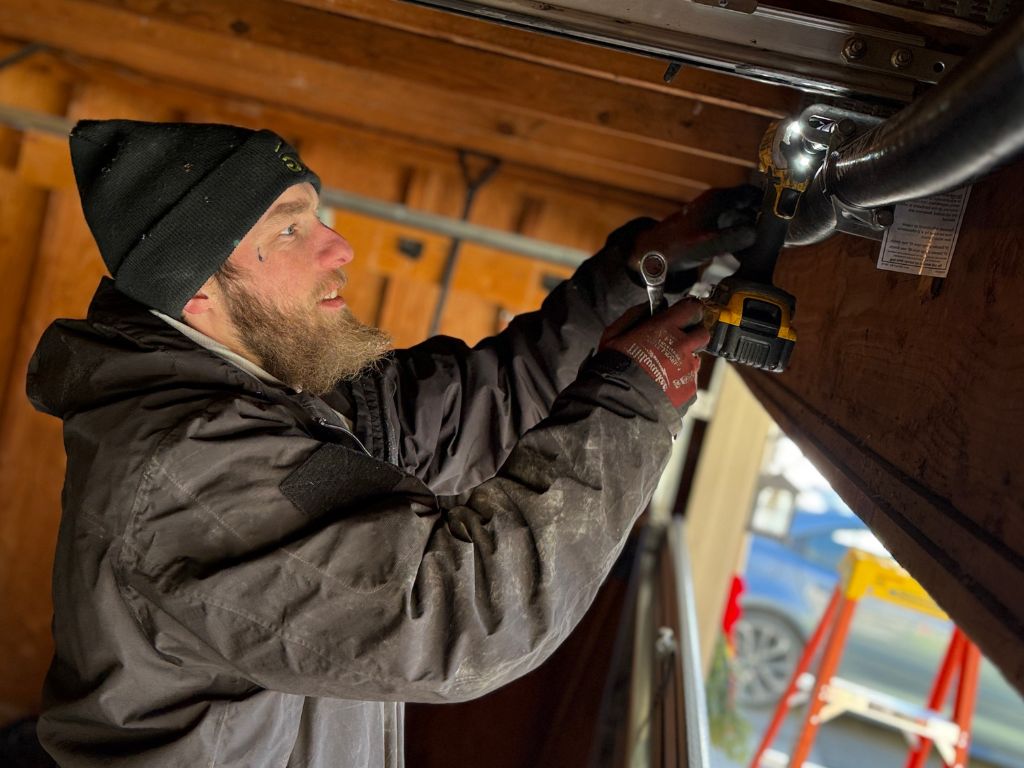
Preventive care is the best way to avoid unexpected breakdowns. Lubricating the rollers and hinges once or twice a year with a silicone-based lubricant keeps things running smoothly. Tightening the hardware on the track and brackets prevents rattling and misalignment. Cleaning the photo-eye sensors with a soft cloth ensures they work when needed. And if you hear a strange noise or notice the door hesitating, do not ignore it. A small problem today can be a big one tomorrow.
For homeowners in Minneapolis and St. Paul, the climate adds extra stress. Freezing temperatures can make lubricants thicken and springs more brittle. Snow and ice can block the track or interfere with the sensors. A quick visual check after a storm can catch problems before they get worse.
Garage door repair is not something most homeowners do every day. But when it is needed, knowing what to look for and how the system works can help you communicate clearly with a technician and make informed decisions. A well-maintained garage door is quiet, safe, and reliable. That is worth the effort it takes to keep it that way.
❧